
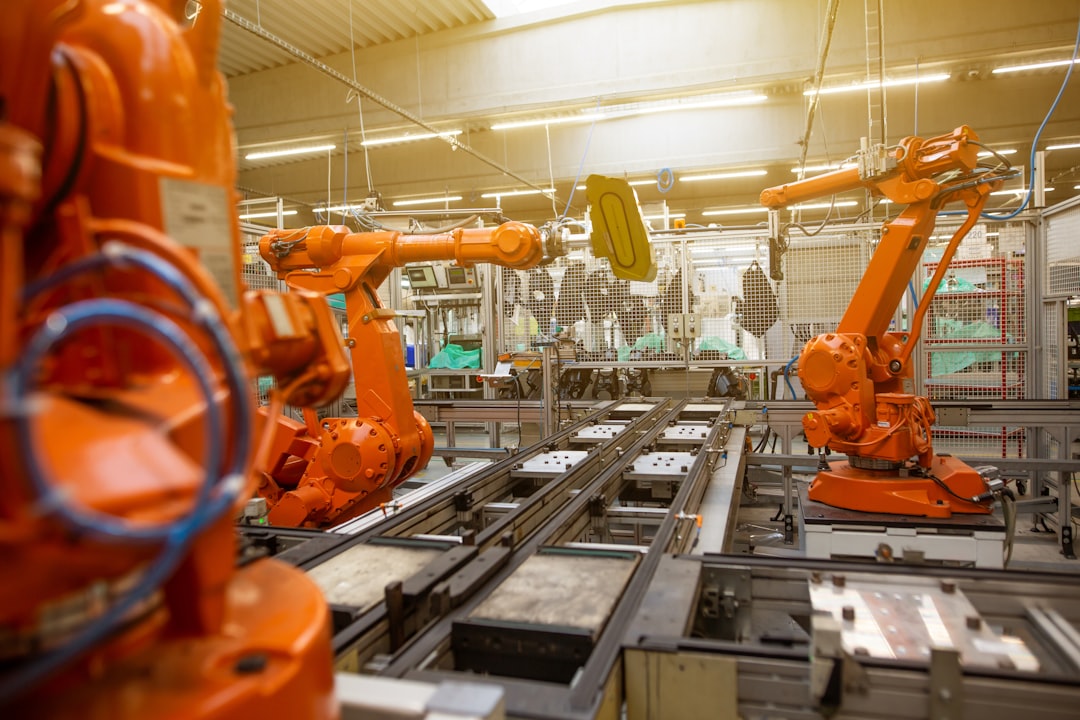
Automation has become a transformative force across various industries, reshaping the way businesses operate and deliver their products and services. The integration of advanced technologies, such as artificial intelligence, robotics, and machine learning, has led to significant changes in operational efficiency and productivity. As companies adopt these technologies, they are able to streamline processes, reduce human error, and enhance overall performance.
This shift not only affects the internal workings of organizations but also influences the broader economic landscape, creating new opportunities and challenges. The impact of automation is particularly evident in sectors such as manufacturing, healthcare, and logistics. In manufacturing, for instance, automated systems have revolutionized production lines, allowing for faster output and improved quality control.
Similarly, in healthcare, automation has facilitated better patient management and streamlined administrative tasks. As industries continue to embrace automation, the implications for the workforce are profound, leading to discussions about job displacement and the need for reskilling. The balance between leveraging technology for efficiency while ensuring a skilled workforce remains a critical consideration for businesses and policymakers alike.
Key Takeaways
- Automation is revolutionizing industries by increasing efficiency and productivity while reducing human error and labor costs.
- Advantages of automation in the workplace include improved safety, faster production, and the ability to handle repetitive tasks with precision.
- The future of manufacturing is being shaped by automation, with the integration of robotics and AI leading to smart factories and mass customization.
- Automation is changing the healthcare industry by streamlining processes, improving patient care, and enabling the development of advanced medical technologies.
- In agriculture, automation is playing a crucial role in increasing crop yield, reducing labor dependency, and optimizing resource utilization for sustainable farming practices.
Advantages of Automation in the Workplace
The advantages of automation in the workplace are manifold, offering organizations the ability to enhance productivity while minimizing costs. One of the most significant benefits is the reduction of repetitive tasks that can lead to employee burnout and decreased morale. By automating mundane activities, employees can focus on more strategic and creative aspects of their roles, fostering innovation and job satisfaction.
This shift not only improves employee engagement but also contributes to a more dynamic work environment. Moreover, automation can lead to substantial cost savings for businesses. By implementing automated systems, companies can reduce labor costs and minimize errors associated with manual processes.
This financial efficiency allows organizations to allocate resources more effectively, investing in areas that drive growth and development. Additionally, automation can enhance data accuracy and reporting capabilities, providing businesses with valuable insights that inform decision-making. As a result, organizations that embrace automation are better positioned to adapt to market changes and maintain a competitive edge.
Automation and the Future of Manufacturing

The future of manufacturing is inextricably linked to the advancement of automation technologies. As industries strive for greater efficiency and flexibility, automated systems are becoming integral to production processes. The rise of smart factories—facilities equipped with interconnected machines and real-time data analytics—illustrates this trend.
These environments enable manufacturers to respond swiftly to changing consumer demands while optimizing resource utilization. Furthermore, automation in manufacturing is not limited to robotics; it encompasses a wide range of technologies, including additive manufacturing and artificial intelligence. These innovations allow for customized production runs and rapid prototyping, which are essential in today’s fast-paced market.
As manufacturers continue to invest in automation, they are likely to see improvements in product quality, reduced lead times, and enhanced supply chain management. The ongoing evolution of manufacturing through automation promises to redefine industry standards and create new avenues for growth.
How Automation is Changing the Healthcare Industry
| Metrics | Impact |
|---|---|
| Reduction in Errors | Improved patient safety and outcomes |
| Efficiency Gains | Streamlined administrative tasks and faster patient care |
| Cost Savings | Lower operational costs and better resource allocation |
| Data Analysis | Enhanced insights for personalized treatment plans |
| Patient Engagement | Empowering patients with self-service options and remote monitoring |
In the healthcare sector, automation is playing a pivotal role in enhancing patient care and operational efficiency. From electronic health records (EHR) systems to robotic surgical assistants, automation is streamlining processes that were once time-consuming and prone to error. By automating administrative tasks such as appointment scheduling and billing, healthcare providers can focus more on patient interactions and clinical outcomes.
Moreover, automation is revolutionizing diagnostics and treatment planning. Advanced algorithms can analyze vast amounts of medical data to identify patterns and predict patient outcomes with remarkable accuracy. This capability not only improves diagnostic precision but also enables personalized treatment plans tailored to individual patient needs.
As healthcare continues to embrace automation, the potential for improved patient outcomes and reduced costs becomes increasingly apparent, paving the way for a more efficient healthcare system.
The Role of Automation in Agriculture
Agriculture is another sector experiencing significant transformation due to automation technologies. Precision agriculture—an approach that utilizes data analytics, drones, and automated machinery—has emerged as a game-changer for farmers seeking to optimize crop yields while minimizing resource use. By employing sensors and satellite imagery, farmers can monitor soil conditions and crop health in real-time, allowing for informed decision-making regarding irrigation and fertilization.
Additionally, automated machinery such as self-driving tractors and robotic harvesters are revolutionizing traditional farming practices. These innovations not only increase efficiency but also address labor shortages that many agricultural sectors face. As farmers adopt automation technologies, they are better equipped to meet the demands of a growing global population while promoting sustainable practices.
The integration of automation in agriculture signifies a shift towards smarter farming methods that prioritize both productivity and environmental stewardship.
Automation in Transportation and Logistics

The transportation and logistics industry is undergoing a profound transformation driven by automation technologies. From autonomous vehicles to advanced supply chain management systems, automation is enhancing efficiency and reducing operational costs. Companies are increasingly leveraging automated systems to optimize route planning, inventory management, and order fulfillment processes.
Autonomous vehicles represent one of the most visible aspects of this transformation. Self-driving trucks have the potential to revolutionize freight transportation by reducing delivery times and lowering fuel consumption. Additionally, automated warehouses equipped with robotics can streamline sorting and packing operations, ensuring faster turnaround times for shipments.
As transportation and logistics continue to embrace automation, the industry is poised for significant advancements that will reshape how goods are moved around the globe.
Revolutionizing Customer Service with Automation
Customer service is another area where automation is making a significant impact. Businesses are increasingly utilizing chatbots and virtual assistants to handle customer inquiries efficiently. These automated systems can provide instant responses to common questions, freeing up human agents to address more complex issues that require personal attention.
This shift not only enhances customer satisfaction but also improves operational efficiency by reducing wait times. Moreover, automation allows companies to gather valuable data on customer interactions, enabling them to tailor their services more effectively. By analyzing customer behavior patterns through automated systems, businesses can identify trends and preferences that inform marketing strategies and product development.
The Rise of Automation in Retail
The retail industry is experiencing a surge in automation as businesses seek innovative ways to enhance the shopping experience while optimizing operations. Automated checkout systems are becoming increasingly common, allowing customers to complete transactions quickly without the need for human cashiers. This not only reduces labor costs but also improves customer satisfaction by minimizing wait times.
In addition to checkout automation, retailers are leveraging data analytics to personalize marketing efforts and inventory management. Automated systems can analyze purchasing patterns to predict demand accurately, ensuring that popular products are always in stock while minimizing excess inventory.
Automation and the Financial Sector
The financial sector is undergoing a significant transformation due to automation technologies that enhance efficiency and security. Automated trading systems allow financial institutions to execute trades at lightning speed based on pre-defined algorithms, reducing human error and increasing profitability. Additionally, robotic process automation (RPA) is streamlining back-office operations such as data entry and compliance checks.
Moreover, automation is playing a crucial role in fraud detection and risk management within the financial industry. Advanced algorithms can analyze transaction patterns in real-time to identify suspicious activities quickly. This capability not only protects consumers but also enhances the overall integrity of financial systems.
As the financial sector continues to adopt automation technologies, it is likely to see increased efficiency alongside improved security measures.
Automation and the Evolution of Energy and Utilities
The energy sector is also experiencing a significant shift due to automation technologies that enhance efficiency and sustainability. Smart grids equipped with automated monitoring systems allow utility companies to manage energy distribution more effectively while reducing waste. These systems enable real-time data collection on energy consumption patterns, facilitating better demand forecasting and resource allocation.
Furthermore, automation is playing a vital role in renewable energy production. Automated systems can optimize the operation of solar panels and wind turbines by adjusting their positioning based on environmental conditions. This capability maximizes energy output while minimizing maintenance costs.
As the energy sector continues to evolve through automation, it is poised for a more sustainable future that prioritizes efficiency alongside environmental responsibility.
The Future of Automation in Various Industries
Looking ahead, the future of automation across various industries appears promising yet complex. As technology continues to advance at an unprecedented pace, businesses must navigate the challenges associated with integrating these innovations into their operations. The potential for increased efficiency and productivity is immense; however, organizations must also consider the implications for their workforce.
Reskilling initiatives will be essential as industries adapt to an automated landscape where certain jobs may become obsolete while new roles emerge. Collaboration between businesses, educational institutions, and policymakers will be crucial in ensuring that workers are equipped with the skills needed for future employment opportunities. Ultimately, the future of automation holds great potential for transforming industries while fostering economic growth—provided that stakeholders work together to address the challenges that accompany this evolution.
FAQs
What is automation?
Automation is the use of technology to perform tasks with minimal human intervention. It involves the use of machines, software, and other technologies to carry out repetitive or complex tasks.
What are the benefits of automation?
Automation can lead to increased efficiency, improved accuracy, cost savings, and the ability to handle repetitive tasks without human error. It can also free up human workers to focus on more complex and creative tasks.
What are some examples of automation in everyday life?
Examples of automation in everyday life include self-checkout machines at grocery stores, automated email responses, and smart home devices that can control lighting, temperature, and security systems.
What industries commonly use automation?
Industries such as manufacturing, transportation, healthcare, finance, and information technology commonly use automation to streamline processes and improve productivity.
What are the potential drawbacks of automation?
Potential drawbacks of automation include job displacement, the need for retraining or reskilling of workers, and the risk of over-reliance on technology. There are also concerns about the ethical implications of automation, such as privacy and security issues.

